
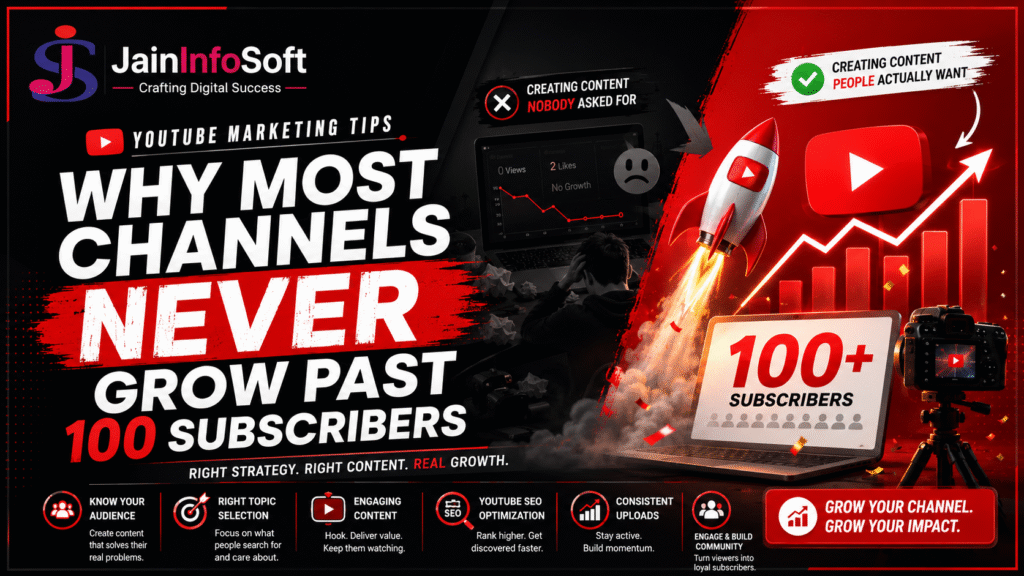
Thousands of businesses start a YouTube channel every month, post a handful of videos, and quietly stop when nothing seems to happen. The channel usually isn’t the problem. The strategy behind it is.
These YouTube Marketing Tips cover what actually drives channel growth — content strategy, YouTube SEO, consistency, and where a structured YouTube Marketing Course Saharanpur fits into building a channel that genuinely works for a business.
By the end, you’ll have a clear picture of why most channels plateau, and a practical plan for avoiding the same mistakes.
Why Most YouTube Channels Stall Early
Most channels that stop growing share the same few problems, and none of them are about production quality.
- Posting whatever feels interesting instead of what the audience is actually searching for
- Inconsistent upload schedules that never let the algorithm build momentum
- Weak titles and thumbnails that fail to earn a click, no matter how good the video is
- Ignoring YouTube SEO entirely, treating it as a social platform rather than a search engine
- Giving up after a handful of videos, before any of them had time to gain traction
Fixing even the first two of these often changes a channel’s trajectory more than any equipment upgrade ever could. A better camera or microphone rarely fixes a channel that’s posting the wrong content to the wrong audience at an inconsistent pace.
YouTube is a Search Engine First
Many creators treat YouTube like Instagram or Facebook, focused purely on engagement. In reality, YouTube functions as the second-largest search engine after Google, and videos need to be built around what people are actually searching for.
This means keyword research matters just as much for YouTube as it does for a blog post. A video titled around a real search query, like “how to choose a digital marketing course,” consistently outperforms a vague, catchy title that doesn’t match any actual search.
This is often the single biggest shift a channel can make. Once a creator starts thinking like a search engine user instead of a content creator chasing views, video ideas become far easier to generate, since the audience is essentially telling you what to make through their search behavior.
YouTube SEO Basics That Actually Matter
A few YouTube SEO fundamentals make a measurable difference in how well a video gets discovered.
- Use the target keyword naturally in the title, ideally near the beginning
- Write a detailed description that includes the keyword and a clear summary
- Add relevant tags, though these matter less than title and description today
- Create a custom thumbnail that clearly represents the video’s content
- Add timestamps for longer videos, improving both usability and search visibility
Skipping these basics is one of the most common reasons genuinely good videos never get discovered by the right audience.
Choosing the Right Content Format
Not every video format works equally well for every business. Here’s how common YouTube formats compare.
| Format | Best For | Typical Effort |
| Tutorial videos | Answering specific “how-to” searches | Medium |
| Explainer videos | Building topical authority on a subject | Medium |
| Behind-the-scenes content | Building trust and personality | Low |
| Testimonials and case studies | Converting warm viewers into customers | Medium to high |
| Shorts | Reaching new audiences quickly | Low |
Most successful channels combine two or three formats rather than trying to master all five at once, especially in the early stages of building an audience.
Building Consistency Without Burning Out
Consistency matters more than frequency alone. A channel posting one genuinely useful video every week usually outperforms one posting daily but abandoning the schedule after a month.
A sustainable approach looks like this:
- Choose a realistic upload frequency you can maintain for at least six months
- Batch-record multiple videos in one sitting to reduce weekly pressure
- Repurpose long videos into Shorts and social clips to multiply output from one recording session
- Review performance monthly and adjust content direction based on what’s actually working
Momentum on YouTube builds slowly at first, and channels that quit in month two often miss the point where consistency starts paying off. YouTube’s algorithm also tends to favor channels with a predictable upload pattern, since it can recommend new videos to an audience with more confidence once there’s a consistent track record to learn from.
Real-Life Examples: YouTube Marketing in Action
Seeing these principles applied to real situations makes them easier to put into practice.
Example 1: A Digital Marketing Institute
A Saharanpur institute starts a channel with generic motivational content and sees almost no growth. After shifting to tutorial-style videos answering real student questions — like “how digital marketing placement actually works” — specific videos start ranking in YouTube search and bringing in steady, free traffic from students actively researching courses.
Example 2: A Local E-Commerce Store
A furniture brand begins posting short product demonstration videos showing furniture assembly and styling tips. These practical, searchable videos consistently outperform earlier promotional ads, since they answer real questions shoppers have before making a purchase decision.
Example 3: A Service-Based Business
A clinic starts a channel explaining common health questions in simple language, avoiding technical jargon. Patients increasingly mention finding the clinic through these videos, often searching for a symptom or condition long before ever searching for the clinic by name.
Using AI Tools for YouTube Marketing
AI Video Tools have made video production genuinely more accessible for small teams. AI can help write scripts, generate captions, suggest titles based on search data, and even edit long videos into short clips automatically.
Tools like ChatGPT work well for scripting and title brainstorming, though the final video still benefits from a real, authentic voice — audiences on YouTube tend to notice and disengage from content that feels overly generic or scripted by AI alone.
The most effective use of AI here is speeding up the parts of production that don’t require a personal touch, like drafting an initial script outline or generating title options to test, while leaving delivery, tone, and on-camera presence entirely human.
How YouTube Marketing Fits Into a Broader Content Strategy
YouTube rarely works best in isolation. It connects closely with the ideas covered in our Content Marketing Guide, since the same principles — genuine value, audience research, and consistency — apply across both blog and video content.
How to Learn YouTube Marketing Properly
Growing a YouTube channel takes more than posting videos and hoping for the best. A structured learning path looks like this:
- Learn YouTube SEO fundamentals — titles, descriptions, and thumbnails
- Study your specific audience’s search behavior on YouTube
- Practice scripting and editing videos efficiently, using AI tools where helpful
- Learn to read YouTube Analytics and adjust content based on real watch-time data
This exact progression is built into Jain Infosoft’s YouTube Marketing Course, combining YouTube SEO, content strategy, and practical video creation into one program.
For a broader skill set, this fits naturally into a complete AI Digital Marketing Course Saharanpur, where video marketing sits alongside SEO, social media, and paid advertising.
Frequently Asked Questions
YouTube Marketing Basics
Why isn’t my YouTube channel growing? Most stalled channels suffer from inconsistent posting, weak titles, or content that isn’t built around real search intent, rather than a lack of production quality.
Is YouTube SEO really different from Google SEO? The core principles are similar — matching content to search intent — but YouTube also weighs watch time, engagement, and thumbnail click-through rate heavily in its ranking.
How often should a business post on YouTube? A realistic, sustainable schedule matters more than frequency alone — one consistent weekly video usually outperforms a burst of daily uploads that stops after a few weeks.
Applying YouTube Marketing Strategy
Can AI tools help with YouTube video production? Yes. AI tools can help with scripting, captions, and editing, though maintaining an authentic, human voice in the final video still matters for audience trust.
What type of video works best for a small business just starting out? Tutorial or explainer videos answering specific, searchable questions tend to perform best for channels just starting to build an audience.
Where can I learn YouTube marketing in Saharanpur? Jain Infosoft offers a dedicated YouTube Marketing Course covering YouTube SEO, content strategy, and video production through hands-on, practical training.
YouTube rewards strategy and patience far more than expensive equipment. Channels that understand their audience, optimize for search, and stay consistent will always outgrow those chasing trends without a clear plan behind them.
Want hands-on training in YouTube marketing and video strategy? Explore the YouTube Marketing Course at Jain Infosoft or get in touch to book a free demo class.